
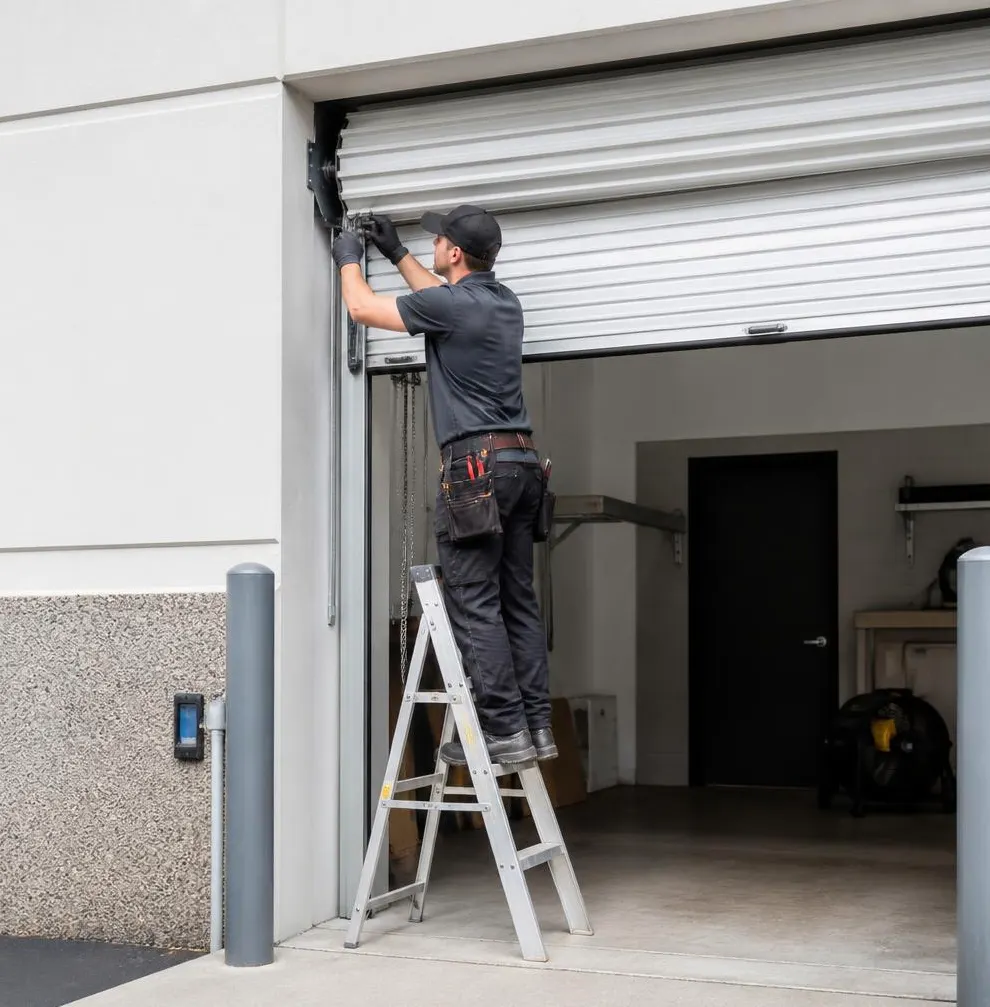
A technician walks into a garage and hears the same two sentences almost every time. One spouse says, "It's been making that noise for months, we need a whole new system." The other says, "It still opens, doesn't it? Just spray some WD-40 on it." Then the tech lifts the door by hand, feels it's heavy on one side, looks at the spring, and says what's actually true: the door itself is probably fine, the spring is at the end of its life, and the opener motor straining to compensate is what's been making the noise. Neither spouse was fully right. Here's how to settle it with facts instead of guesses.
What Actually Wears Out, and When
A garage door system isn't one thing aging at one rate. It's several parts with very different lifespans:
- The door panels themselves (steel, wood, or aluminum) typically last 20 to 30 years if the material holds up. The panels are rarely the reason a door "needs replacing."
- Torsion and extension springs are rated in cycles, usually 10,000 to 15,000 open-close cycles. For an average household opening the door a few times a day, that's roughly 7 to 10 years. Heavier doors, or households that use the garage door as the main entrance, burn through that faster.
- Rollers (especially the original builder-grade plastic ones) often need replacing every 7 to 10 years, sooner if they're not lubricated.
- Openers last about 10 to 15 years. Most don't die suddenly; they get noisier, slower, and less reliable with the safety sensors before they finally quit.
- Cables, hinges, and weatherstripping are wear items too, usually swapped out during normal service rather than lasting the life of the door.
So when someone says "the garage door is 12 years old, it's time," the more accurate question is: which part is 12 years old, and has it actually been maintained?
What Shortens the Lifespan Around Here
Coastal and near-coastal air in this part of California carries salt, and salt is hard on metal hardware, tracks, and springs. Homes closer to the water tend to see corrosion on hinges and spring coils years before an identical setup further inland would show it. If you can see rust starting on the springs or track bolts, that's not cosmetic, it's a sign the metal is weakening.
Dust and dry-season debris are the other local factor. During the dry months, grit works its way into the tracks and rollers, grinding away at lubrication and accelerating wear on anything that rolls or slides. Wildfire smoke season adds fine particulate that does the same thing, just quieter. If your garage door has sounded gritty or scrapey after a dry, smoky stretch, that's exactly what's happening.
Beyond weather, the behavior that shortens a system's life the fastest is simple neglect plus DIY shortcuts:
- Letting a door run unbalanced (the opener straining to lift one side) puts extra load on the motor gears and the opposite spring.
- Skipping lubrication lets rollers and hinges wear metal-on-metal instead of gliding.
- DIY spring replacement is genuinely dangerous: a wound torsion spring under tension can cause serious injury, and getting the wind count or bar placement wrong also wrecks the opener fast.
- Ignoring a door that reverses randomly or doesn't fully close trains people to just override the safety sensor, which both defeats the safety feature and masks a problem that's getting worse.
What Actually Extends It
None of this requires a major overhaul. The things that add years to a system are boring but effective:
- Lubricate twice a year with a silicone or lithium-based garage door lubricant on rollers, hinges, and the torsion spring. Skip WD-40 for this; it's a cleaner, not a lubricant, and evaporates fast.
- Check the balance by disconnecting the opener and lifting the door by hand. It should stay put at about waist height. If it drops or flies up, the springs are compensating poorly and need attention.
- Keep tracks clean, especially after dry, dusty, or smoky stretches, so debris doesn't grind into the rollers.
- Replace weatherstripping when it cracks or flattens. Beyond keeping winter rain and draft out, it also keeps grit from blowing in during dry season.
- Don't wait for the spring to fully break before replacing it. A spring that's visibly stretched, rusted, or making noise under load is close to the end, and replacing proactively is cheaper and safer than an emergency call after it snaps with the door open.
- If you're doing earthquake retrofit work on the house, it's worth having the garage door hardware checked at the same time, since older track brackets and lag bolts may need reinforcing along with everything else.
When to Call Long Beach Garage Door
If the door is unbalanced, the spring looks rusted or stretched, or the opener has started making grinding noises, that's the point to call rather than keep adjusting things yourself. Long Beach Garage Door handles spring replacement safely with the right tools and spring ratings for your door's weight, and offers preventive maintenance visits that cover the lubrication, balance check, and hardware inspection most people never get around to doing themselves. For openers that are limping along past the 10-year mark, a technician can tell you honestly whether a repair makes sense or whether it's time for a new unit.
If your garage door has become the subject of a household debate, settle it the easy way. Call Long Beach Garage Door for a straightforward inspection anywhere in Long Beach, Signal Hill, Lakewood, or the surrounding area, and get a real answer instead of another guess.